Hiroshima Carp’s Takashi Shimozuru on the “Balance” He Valued as a Farm Team Manager
September 22, 2026
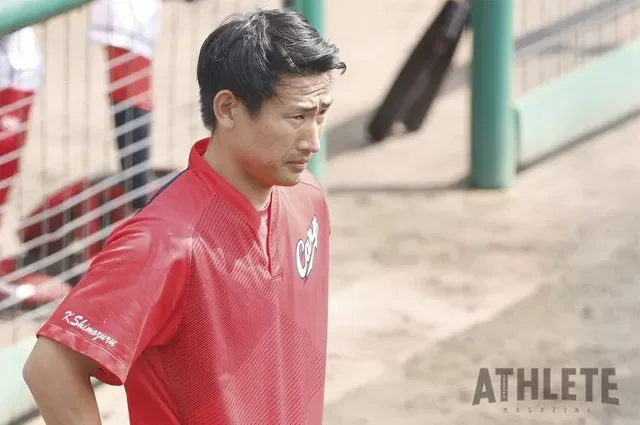
Former Hiroshima Carp outfielder Takashi Shimozuru spent four years as the club’s farm team manager after retiring as a player. Now working as a scout, Shimozuru reflected on the responsibility of supporting young players, coordinating media requests, and helping players through the difficult moments of professional baseball. Above all, he said the most important thing was finding the right “balance.”
The Hiroshima Carp have seen several homegrown prospects and rookies emerge this season, with players who once competed fiercely on the farm team now making their mark at the first-team level.
Behind those players was a demanding development environment where young athletes worked to improve their skills, strengthen their bodies, and compete for a chance to reach the first team.
One of the people supporting them behind the scenes was former farm team manager Takashi Shimozuru.
Shimozuru joined professional baseball in 2013 and spent nine seasons as a player with Hiroshima and Rakuten. After retiring, he returned to Hiroshima as a team employee and served as the Carp’s farm team manager from 2022 through 2025. In 2026, he moved to the scouting department.
Looking back on his playing career, Shimozuru said he did not achieve everything he had hoped for, but he was grateful for the experience of being part of Hiroshima’s three consecutive Central League championships.
“I wasn't able to perform as well as I had imagined, but I was fortunate enough to experience three straight league championships with the Carp, and I was able to play in some games during that time.”
He was traded to Rakuten midway through the 2019 season, giving him the opportunity to experience a completely different organization and life in the Pacific League.
“Being able to play for a different team and in the Pacific League gave me another perspective. It was a really valuable experience for me.”
After being released by Rakuten in 2021, Shimozuru still wanted to continue playing, although he was also dealing with injuries. Soon after his retirement, however, the Carp approached him about returning to the organization.
“I was really happy that the Carp reached out to me even though I had once left the team. I decided that I wanted to come back.”
He returned to Hiroshima in 2022 as a team employee.
As farm team manager, one of his responsibilities was coordinating media interviews with players. That required him to carefully consider each player's physical condition and circumstances.
“The thing I paid the most attention to was the player's condition and situation. Of course, being interviewed is also part of a player's job, so I tried to find a timing that would put as little burden on the player as possible while also understanding what the media needed.”
For Shimozuru, that was ultimately a question of balance.
“In that sense, the thing I probably thought about most in public relations was balance.”
He had to consider the player's position, while also representing the organization and serving as a point of contact for many different people.
“We have to consider the player's position, but at the same time, we also have a responsibility as a team and as an organization. Being the point of contact for so many different people's work means that, in a sense, you're at the center of everything. I was always thinking about how to make sure that nobody, including the players, was put under unnecessary pressure.”
There was another difficult part of the job that Shimozuru understood particularly well because he had experienced it himself: saying goodbye to players whose professional careers were coming to an end.
Professional baseball is an unforgiving world, and every year some players are released. Farm team staff are often among the people who stay closest to those players until the very end.
“Because I've experienced it myself, there were a lot of emotions when I had to see players leave and watch them begin a new chapter. There was definitely sadness involved.”
Shimozuru's time with the Carp eventually became the longest period he had spent with any organization. Although he was born in Yokohama, his years in Hiroshima had made the city feel like a second home.
“I've been with the Carp for more than 10 years now, and when I look back at my career, this has become the longest chapter of my life. I've also lived in Hiroshima for a long time, so I can really call it my second hometown.”
And despite his move from player to team employee and now scout, his feelings toward the organization remain unchanged.
“The Carp is a team I truly love. I want to continue facing my work sincerely and do everything I can to support the organization.”
For players fighting their way through the farm system, the path to the first team is often defined by competition, setbacks and uncertainty.
But behind that process are people like Shimozuru, whose job is not simply to manage schedules or arrange interviews. His role was also to understand the different pressures surrounding young players and find the balance that allowed them to keep moving forward.