Former Carp Manager Junro Anan Recalls the Old Hiroshima Municipal Stadium and Its Famous Hecklers
August 11, 2026
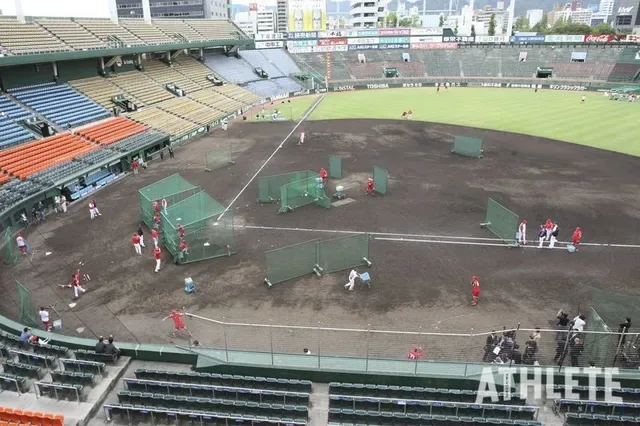
Former Hiroshima Carp player and manager Junro Anan looked back on the old Hiroshima Municipal Stadium, a ballpark that shaped much of his baseball career. From the deafening heckling of fans during the Carp’s difficult years to the unforgettable celebration of Hiroshima’s first championship, Anan experienced both the hardships and the greatest joys of Carp history at the stadium.
For generations of Hiroshima Carp fans, the old Hiroshima Municipal Stadium was more than just a baseball field. It was the home of the Carp and the stage for countless memories, from difficult seasons to historic championships.
Few people experienced more of that history than the late Junro Anan, who played for the Carp and later managed the team.
Anan joined Hiroshima in the late 1950s, just before the new stadium was completed. At the time, Hiroshima was still recovering from the devastation of World War II.
“I remember thinking, ‘How could they possibly build a night baseball stadium here?’” Anan recalled.
Before the Hiroshima Municipal Stadium opened, the Carp played their home games at Hiroshima Prefectural Baseball Stadium, which did not have lighting for night games. With Monday and Friday often serving as travel days and Sunday doubleheaders common, players had to complete games during the daytime.
For Anan, the arrival of a stadium equipped with lights was therefore a major change.
“When the Hiroshima Municipal Stadium was completed, I was honestly thinking about how we could finally play doubleheaders at night,” he said.
The stadium was also considered one of the brightest ballparks in Japan at the time, something Hiroshima could take pride in.
But what Anan remembers most from his playing days was not the stadium itself.
It was the fans.
“There weren't that many spectators back then, so you could hear every heckle from the stands,” Anan said.
The Carp were struggling teams in those early years, and the criticism from the stands could be brutal.
“My seniors used to tell me, ‘If you can play without being affected by the heckling, you're finally a real player.’”
Anan admitted that criticism at the Hiroshima Municipal Stadium hurt more than it did at other ballparks.
“In other stadiums, the heckling didn't bother me as much. But hearing it in Hiroshima was the hardest.”
One of the most difficult memories came in 1964, when a controversial play involving Anan's bunt led to a game being called off.
With runners on first and second and no outs against the Hanshin Tigers, Anan attempted a bunt that resulted in a ball being ruled fair. After a prolonged protest and a disputed change in the ruling, the Carp protested for approximately two and a half hours.
The game was eventually called off, and around 1,000 fans rushed onto the field.
Anan said he felt a strong sense of responsibility because his bunt had been at the center of the incident.
Over the years, the stadium itself continued to change. Additions and renovations gradually expanded the stands.
Anan rarely had the opportunity to watch the stadium from the stands, but he could see the changes from the field.
“I would look up at the stands and think, ‘So that's how they've changed it,’ or ‘That's what they've added.’ Now I look back and think, ‘At first, the stadium only came this far.’”
Yet the first time he truly stopped to appreciate the entire stadium was during one of the greatest moments in Carp history.
Hiroshima won its first Central League pennant in 1975, and Anan remembers circling the field after the championship and waving to the fans.
“It feels incredible to walk around the field after winning and wave to the stands. It made me realize again how wonderful winning a championship was.”
The same stadium that had once been a place where he was beaten down by criticism had suddenly become a place filled with celebration.
“I had spent times there with my head down because of the heckling. But then I was standing there while everyone was celebrating with us.”
For Anan, the old Hiroshima Municipal Stadium represented both sides of his baseball career.
“I experienced both the good and the bad there.”
That may be the greatest reason the old stadium remains so important in Carp history. Long after its demolition, the memories created there continue to connect generations of Hiroshima baseball fans with the players who once stood on its field.