Hiroshima Carp Suffer NPB’s Biggest Attendance Drop: Why the Club’s Handling of the “Zombie Cigarette” Scandal May Have Disappointed Fans More Than the Scandal Itself
October 11, 2026
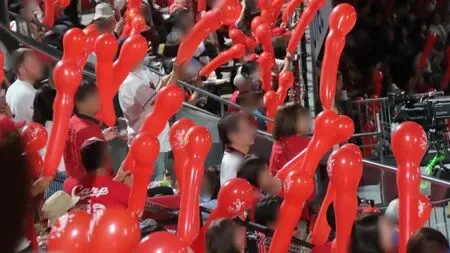
Japanese professional baseball set a new attendance record in 2026, but the Hiroshima Carp recorded the largest year-on-year decline among NPB's 12 teams, with attendance falling 5.1%. This analysis argues that the team's poor results were not the only factor behind the decline. It suggests that the club's handling of the controversy involving former player Ryūtarō Hatsuki, the lack of a formal press conference and questions about its accountability may have deepened fans' distrust. The article also examines how Japanese baseball clubs traditionally manage players' conduct compared with Major League Baseball.
Japanese professional baseball's regular season has come to an end, with total attendance reaching 27,177,247 and an average of 31,675 spectators per game. Both figures surpassed the previous records set in 2025, when 27,040,286 fans attended games, averaging 31,515 per game.
Average attendance increased for eight of NPB's 12 teams. Among the four clubs that saw declines, the Hiroshima Toyo Carp experienced the largest drop, down 5.1% from the previous year.
The Carp had five home games at Mazda Stadium this season in which attendance fell below 20,000:
June 16 vs. Nippon-Ham: 17,762
July 14 vs. DeNA: 19,004
July 15 vs. DeNA: 18,986
September 24 vs. Yomiuri: 19,883
October 1 vs. Chunichi: 18,915
Mazda Stadium has a maximum capacity of approximately 33,000. Before this season, the last time attendance at a Carp home game fell below 20,000 was September 20, 2022, when 11,736 fans attended a game against Chunichi.
The Carp's Handling of the Controversy
This is Takahiro Arai's fourth season as manager. Hiroshima finished second in 2023, his first year in charge, but has failed to reach the postseason since then. The Carp finished fourth this season, 9.5 games behind third-place DeNA.
It is fair to say that the team has repeatedly fallen short of the expectations of its passionate fan base.
However, the Carp's struggles cannot necessarily be attributed solely to Arai's managerial decisions or the team's performance on the field. The club's handling of a drug-related controversy that began in January may also have contributed to growing distrust among supporters.
In January, Hiroshima infielder Ryūtarō Hatsuki was arrested by Hiroshima Prefectural Police on suspicion of using a substance known as “zombie cigarettes,” which contains etomidate, a designated drug. The alleged use took place at his home in December of the previous year. Reports said the investigation began after a family member living with Hatsuki contacted authorities about his unusual behavior.
Hatsuki joined Hiroshima after being selected in the seventh round of the 2018 NPB draft out of Kamimura Gakuen High School. Standing just 168 centimeters tall, he gradually established himself through his speed and defensive ability. By the end of the 2025 season, he was being discussed as a potential successor to Ryōsuke Kikuchi at second base for 2026.
Hatsuki admitted to using the substance in February, and Hiroshima terminated his contract on February 24. The club also conducted its own internal investigation. Subsequent media reports said police had administered urine tests to several other players, but the tests reportedly produced no results supporting drug use.
The Club Initially Took a Wait-and-See Approach, Then Police Conducted Searches
Hatsuki's first court hearing was held at the Hiroshima District Court on May 15, and the proceedings concluded that day. During questioning, Hatsuki reportedly said that he had believed using the substance was safe because other Carp players around him were also smoking it.
He received a one-year custodial sentence, suspended for three years, and did not appeal, making the conviction final.
After his release from the club, Hatsuki also made claims during a livestream on social media. He alleged that six Carp players, including himself, had purchased the substance from the same person.
According to reports by Sports Hochi and other outlets, club president Kiyoaki Suzuki responded:
“We have nothing to comment on. We have conducted our own investigation and are cooperating with the police investigation. The investigation is ongoing, and we are not going to respond to every statement made online.”
On July 13, the weekly magazine SmartFLASH published private photographs showing the man charged with supplying etomidate alongside Hatsuki and several Carp players, including Kaito Kozono, Masaya Yano and Shunsuke Tamura.
Suzuki maintained his position, saying the club would not comment on weekly magazine reports.
However, Yano, who had appeared in a photograph with the man, was removed from the active roster on July 17. Suzuki explained that the club had serious concerns about a player being in a private, enclosed space with someone described as a drug dealer.
Tamura was already playing in the farm league at that point because of poor performance.
On July 30, Hiroshima Prefectural Police searched the homes and other locations associated with Yano and Seita Maekawa as part of an investigation into suspected violations of the Pharmaceuticals and Medical Devices Act involving a designated drug. Maekawa's name had not previously appeared in reports about the controversy, and he was removed from the active roster that day.
After police searched the players' homes, owner Hajime Matsuda spoke to reporters and, visibly emotional, apologized to fans and others affected.
“I am filled with an overwhelming sense of regret.”
A Decision Made While Saying the Players Were “Innocent”
On August 18, Kozono, the only player among those linked to the controversy who was still appearing in first-team games, was removed from the active roster. Manager Arai, however, cited a lack of sharpness in his play, including defensively, as the reason.
In September, the man accused of supplying the substance testified in court that he had not supplied zombie cigarettes to anyone other than Hatsuki. Meanwhile, the online edition of Shūkan Bunshun published allegations that Ryōsuke Kikuchi had pressed a heated fork against Hatsuki's neck.
On September 22, Hiroshima announced that Arai would remain as manager despite the expiration of his contract at the end of the season. Reports said Arai had repeatedly offered to resign, but the club persuaded him to stay.
On September 25, Yano and Maekawa were referred to prosecutors. Both denied the allegations, and Yano's lawyer stated that his client had neither received nor used illegal drugs.
NPB's first period for announcing players who would not be retained began on September 28. On October 1, Hiroshima announced that it would not renew the contracts of Kozono, Yano, Tamura and Maekawa.
Suzuki explained that the club had concluded it would be difficult to establish the trust needed for the team to unite under Arai next season. At the same time, he said the club had not confirmed that the players had used the drug. His description of their status was striking:
“If you ask whether they're innocent or guilty, they're innocent.”
Suzuki said that interviews with the players had raised inconsistencies and suspicions in the club's view, and that Hiroshima had made its own organizational decision separately from any judicial determination.
All four players have expressed their intention to continue their professional careers. Kozono also denied involvement in illegal acts, including the use or possession of illegal drugs, in a statement on social media.
What emerges from the entire zombie cigarette controversy, this analysis argues, is an ambiguity about the club's own position.
When a player becomes involved in misconduct or a serious controversy, the club's role in making decisions and explaining those decisions to the public is important.
How Does MLB Handle Player Misconduct?
In Major League Baseball, players have contractual relationships with their clubs and sign uniform player contracts. They are expected to perform at a high level commensurate with their salaries, but they are also expected to uphold professional standards and conduct themselves responsibly.
Players involved in misconduct, including illegal drug use or violence, may face suspensions or other penalties under their contracts and the rules negotiated between the league and the players' union. From a club's perspective, a player who violates those standards can be viewed as having betrayed the organization.
Trevor Bauer, the Cy Young Award-winning pitcher who also played for DeNA, was accused of sexual assault by a woman while with the Los Angeles Dodgers in 2021. MLB placed Bauer on paid administrative leave while investigating and subsequently imposed a suspension. In January 2023, the Dodgers released him.
Bauer consistently denied the allegations and was not criminally charged. In October 2023, he reached a settlement in a civil lawsuit with the woman. The settlement, however, did not constitute a judicial finding that he was innocent. Bauer has not returned to MLB since then.
The point is that MLB took action under its own rules, independently of a criminal court ruling, and the Dodgers ultimately released Bauer.
In Japan, NPB players are generally classified as independent contractors and sign player contracts based on the league's uniform contract.
Nevertheless, Japanese clubs are often expected to supervise players' lives beyond the ballpark, particularly when they are young and unmarried.
Teams operate player dormitories, often near their farm facilities, where younger players live together. Clubs provide meals and manage aspects of players' health and daily routines. At some organizations, former professional players serve as dormitory managers and enforce curfews, reprimanding players who return late.
Large Japanese corporations historically operated employee dormitories to manage younger workers. In some respects, a similar culture continues in professional baseball.
Consequently, when a player becomes involved in misconduct, clubs in Japan frequently apologize publicly, acknowledging that they may have failed to supervise or guide the player adequately, including in his private life.
Although players classified as independent contractors are responsible for their own actions, Japanese baseball clubs have often treated them much like company employees and accepted some responsibility for their conduct.
Hiroshima Must Fulfill Its Duty to Explain
The Hiroshima Toyo Carp are unusual among NPB clubs because they have no parent company. They are often described as a “community-owned club,” with Matsuda as its central figure, and their close-knit, family-like culture has long been part of their identity.
Yet in this controversy, the club has emphasized individual player responsibility while providing what critics see as an inadequate explanation of its own response.
If Hiroshima has decided to adopt a different approach, that change in itself may not necessarily be a problem.
However, once suspicions emerged that the issue might involve multiple players rather than just one individual, it became reasonable to ask whether the club bore some responsibility for failing to identify or address the situation earlier.
At a minimum, Hiroshima needs to fulfill its duty to explain the sequence of events to fans, sponsors and league officials, given that one of its players was arrested and other players' homes were searched by police.
Since the Hatsuki case came to light, the club has responded to media inquiries in fragments, but it has never held a formal press conference.
From the outside, it is understandable that some people might see this as an attempt to avoid scrutiny.
The decline in attendance may therefore reflect not only the team's poor results but also fans' distrust of how the club has handled the controversy.
Arai, who has led the team to the postseason only once in his four seasons, reportedly offered to resign several times. The club must have considered potential replacements, but it has been suggested that few managers were willing to take on the job amid the current turmoil. Under that interpretation, Hiroshima ultimately asked Arai to continue because it had few alternatives.
Poor Crisis Management Can Have Lasting Consequences
As noted earlier, Hiroshima has no parent company. The other 11 NPB teams have corporate parents, many of them major Japanese companies with access to lawyers and crisis-management specialists. Those resources can be brought to bear when a club faces a serious controversy.
Hiroshima, by contrast, has given the impression of struggling to respond at the level of a small, privately run business.
There is a historical example of how a scandal can damage both a team's reputation and its finances.
In 1969, players from the Nishitetsu Lions were found to have collaborated with organized crime figures in a game-fixing scheme. The scandal expanded in 1970, and four Nishitetsu players were permanently banned, with numerous others also punished.
The team lost key players and struggled on the field. Attendance fell sharply, from 580,000 in 1970 to 362,600 in 1971. The club's finances deteriorated, and the Nishitetsu Lions were eventually sold.
In short, the club's handling of the scandal and the resulting distrust among fans and the wider public may also have contributed to its decline.
It may already be late in the process, but the Hiroshima Toyo Carp should demonstrate sincerity and provide a fuller explanation to the public.