Carp Executive Suzuki Explains Decision to Release Four Players: “If You Ask Whether They’re Innocent or Guilty, They’re Innocent”
October 1, 2026
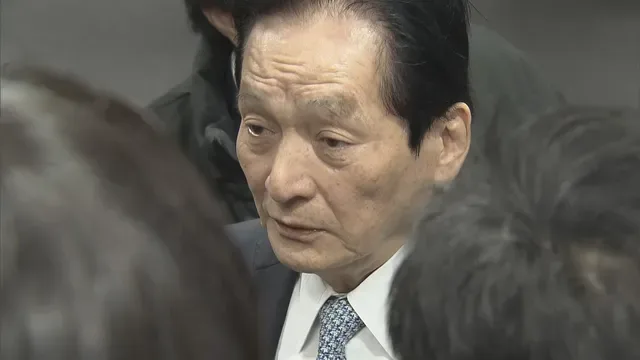
Hiroshima Carp Baseball Operations Director Kiyoaki Suzuki explained the club’s decision to release Kaito Kozono, Masaya Yano, Seita Maekawa and Shunsuke Tamura, saying the club had been unable to confirm that any of the four had used etomidate, but had determined that it would be difficult to rebuild a relationship of trust with them heading into next season.
The Hiroshima Carp announced on October 1 that they would not renew the contracts of Kaito Kozono, Masaya Yano, Seita Maekawa and Shunsuke Tamura for the 2027 season.
The four players had been linked in various ways to the controversy surrounding so-called “zombie tobacco,” products containing the designated drug etomidate. However, Carp Baseball Operations Director Kiyoaki Suzuki stressed that the club had not confirmed that any of the four players had actually used etomidate.
“Since the arrest of former player Genki Hatsuki, we have continued our internal investigation. At this point, we have not been able to confirm any fact that they used etomidate.”
Despite that, the club concluded that continuing with the four players would make it difficult for the team to move forward together under manager Takahiro Arai.
“We determined that it would be difficult for them to build a relationship of trust with the club as we move toward next season under manager Arai.”
Suzuki emphasized that the decision was not based on newly confirmed evidence of misconduct.
“This is not because a specific fact about them was uncovered through our investigation.”
“We decided there was nothing else we could do”
When asked why Kozono and Tamura, who had primarily been the subject of weekly-magazine reports rather than police action, were also released, Suzuki said the club had conducted its own investigation and found information that raised questions.
He declined to discuss the details of the investigation, but said the club had reached the same conclusion regarding all four players.
“We have conducted our own investigation, and there were things that didn't match up. I can't discuss the details, but regarding these four players, we decided that there was nothing else we could do.”
Two of the four, Yano and Maekawa, had reportedly been referred to prosecutors in connection with the investigation. Suzuki noted that the club did not know the outcome of those proceedings.
“We don't know the result yet. They may even be innocent.”
The club therefore did not base its decision solely on whether the players had violated a law or club rule.
Suzuki pointed to the language in the standard NPB contract concerning sportsmanship and the responsibility of professional athletes to act as role models both on and off the field.
“It's not simply about whether they violated a rule. We included those considerations in our decision.”
“If you ask whether they’re innocent or guilty, they’re innocent”
Suzuki was asked directly whether the club's investigation had deepened its suspicions about the four players.
He rejected that characterization.
“There are no suspicions. It's not about suspicion. It's about whether, as we continue working together as a team, we can say, ‘This player is okay,’ or if something else were to come up, say, ‘There is no way this player could have done something like that.’”
He then gave the clearest description of the club's position.
“If you ask whether they're innocent or guilty, they're innocent. But when we decide whether to offer a contract, we consider various pieces of information and conduct our investigation. That's simply the judgment we made.”
Suzuki said the club had conducted interviews with the players for more than six months, with some players interviewed five or six times.
He acknowledged that some answers were clear while others were not.
“There were things that made us feel uncertain. We can't say everything was true, but we can't say everything was false either.”
The club ultimately treated those uncertainties as one factor in its decision.
Why release them now?
Suzuki explained that the timing was deliberate.
Had the club determined that the players had committed a clear violation during the season, disciplinary action could have been taken immediately. Instead, the club waited until the period when it makes decisions about contracts for the following season.
“If it had been a violation, disciplinary action during the season would have been possible. That didn't happen. This is simply the period when we can make our decision about next year's contracts, so we decided not to renew them.”
The Carp also chose not to trade the players or place them into the active-player draft.
Suzuki acknowledged that the club would lose four players who still had considerable value as baseball players, but said the organization wanted to make a clear break rather than seek something in return.
“Even if it means a loss for us, we decided that this was what we should do. Rather than thinking about exchanging them for other players, we decided to make them free agents and leave the decision to other clubs.”
He also explained why the announcement came on October 1.
“We have to make a decision somewhere. We thought it would be better to do it sooner, so we decided to do it today.”
Other teams are free to sign them
Suzuki said the Carp would not prevent the four players from continuing their careers elsewhere.
“There is no particular support from us. There have been players in the past who had been involved in misconduct and were still accepted by other clubs. That's for each club to decide.”
He added that the four can continue using Hiroshima's facilities through the end of November because they remain under contract until then.
Kozono and Yano's farm-team assignments
Suzuki was also asked about Kozono spending time on the farm team from August.
He said that was manager Arai's decision and was separate from the club's later contract decision.
As for Yano, Suzuki acknowledged that he personally asked for the infielder to remain away from the first team after photographs related to the controversy were reported.
“With the reports about the photographs already out there, I felt it would be difficult for him to be with the first team, so I asked him to stay away.”
The club's investigation
The Carp's internal investigation began after Hatsuki's arrest and was conducted primarily through interviews.
Suzuki said the club did not bring in outside investigators.
He also explained why the organization did not publicly disclose everything it learned.
“Our investigation does not have the authority of a police investigation. It was mainly about hearing things such as, ‘We heard this rumor,’ or ‘Could this have happened?’ and then confirming them.”
Because the police investigation was ongoing, the club also had to be careful not to interfere with it.
“We couldn't simply make everything we learned public. There could have been issues with the police investigation, and there were also privacy concerns. We couldn't release anything that wasn't certain.”
Suzuki said the internal investigation is considered closed for now, although it could resume if new information emerges.
“The arrest happened first, so everyone became reluctant to speak”
Suzuki suggested that the circumstances surrounding the investigation made it difficult for players to speak openly.
“Because everything started suddenly with an arrest, I think there was a part of it where everyone became reluctant to speak.”
He contrasted the situation with matters such as online gambling, where players might be able to voluntarily come forward.
Once a police investigation had begun, however, the club could not simply disclose everything it discovered through its own interviews.
How much responsibility does the club bear?
Suzuki also addressed criticism from fans and others who had been disappointed by the controversy surrounding the team.
“We feel a great deal of responsibility for causing considerable trouble and concern to our fans, those involved with the club and other teams, and we sincerely apologize.”
At the same time, he stressed the difficulty of monitoring players' private lives.
“These individual matters did not take place within the baseball activities that we normally manage. They involved private activities, so there are different opinions about how much responsibility we as a club should truly take for those things.”
Suzuki said the club does not—and cannot—know everything its players do away from baseball.
However, he also pointed to the responsibilities that come with being a professional athlete.
“We can't know everything about their private activities, and it's not realistic to say that the club should disclose everything they do during the offseason. But professional baseball contracts also require players to behave appropriately in their individual activities, and I want them to understand that responsibility and act accordingly.”
When asked whether he believed the club itself should take responsibility for the situation, Suzuki responded:
“If you believe we are responsible and want to hold us accountable, then please do so.”
Owner representative Kazui Matsuda added that the organization would seek to fulfill its responsibility by aiming to have the team move forward as one next season.
A broader compliance effort
Looking ahead, Suzuki said the Carp intend to reinforce education and warnings for players.
The club plans to address not only the “zombie tobacco” controversy but also other potential issues involving professional athletes, including online gambling and associations with organized crime.
He said the club would discuss these matters internally during the offseason, although he did not believe there was a need to publicly announce the details.
For now, the Carp have made their decision on the four players despite acknowledging that they have not confirmed etomidate use by any of them.
The four are free to pursue opportunities with other organizations, while Hiroshima moves toward 2027 with the difficult task of rebuilding both its roster and its relationship with its supporters.