Takahiro Arai on Shosei Nakamura's Costly Baserunning Error: "Sometimes It Takes Courage to Stop"
September 17, 2026
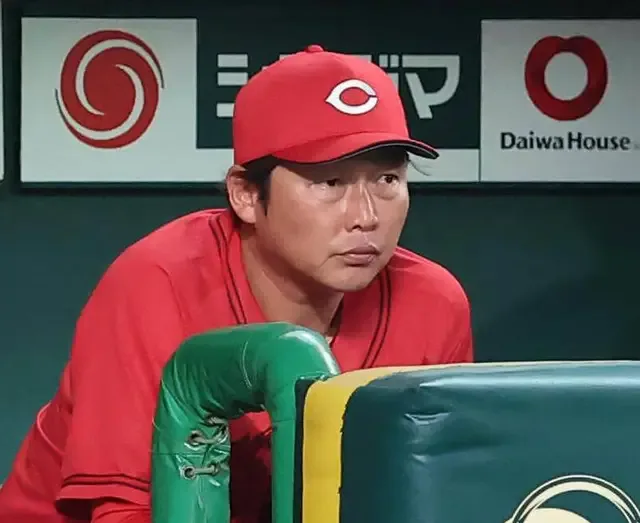
Hiroshima's three-game winning streak came to an end with a 7-2 loss to the Hanshin Tigers at Koshien Stadium. Hiroki Tokoda endured his worst outing of the season, allowing seven runs in four innings, while manager Takahiro Arai emphasized the importance of situational awareness after Shosei Nakamura was thrown out trying to take second base.
The Hiroshima Carp's three-game winning streak came to an end on September 17 as they suffered a 7-2 loss to the Hanshin Tigers at Koshien Stadium.
Starter Hiroki Tokoda endured his worst outing of the season, giving up seven runs over four innings and taking his fifth loss of the year.
Hiroshima's problems began in the first inning. After a throwing error by third baseman Shogo Sakakura helped put runners on first and second with one out, Tokoda surrendered consecutive RBI singles to Teruaki Sato and Yusuke Ohyama, giving Hanshin an early 3-0 lead.
The Tigers added another run in the second inning after consecutive hits put runners at first and third, with Shota Morishita driving in the fourth run.
Hanshin then broke the game open in the fourth. Morishita hit a two-run home run, followed by a solo shot from Ohyama, giving the Tigers a 7-0 advantage.
The seven runs were Tokoda's most allowed in a game since September 26, 2025, against Yakult at Jingu Stadium, and his first seven-run outing of the 2026 season.
Arai acknowledged that the defensive error in the first inning put Tokoda in a difficult position, but said Hanshin's lineup was capable of punishing even small mistakes.
"There was an error involved in the first inning, so I feel bad for him in that respect. But when he leaves pitches even a little bit over the middle, they have a lot of good hitters, and they won't let those pitches go."
The loss also came at the beginning of a nine-game stretch, raising concerns about the workload placed on Hiroshima's bullpen.
Arai, however, praised the relievers who followed Tokoda.
"That's true. But Akagi, who came in during the game, gave us two innings, and Sugita and Hojo also pitched really well."
Hiroshima's offense managed only two runs, although both came on home runs.
Sakakura drove in Hiroshima's first run with an RBI hit in the fourth inning. Then, in the sixth, Hiroki Omori launched a solo home run into the center-field stands.
Arai praised the quality of the hit, particularly against Hanshin's pitching.
"He hit a home run to the back of the center field against a pitcher who had only allowed two runs over nine innings. Omori had a really good at-bat."
Omori had been placed in the leadoff spot based partly on his previous results against the opposing pitcher.
"Yes, of course."
There was also a notable milestone for veteran infielder Ryusuke Kikuchi.
Kikuchi led off the fourth inning with a single to center, reaching 100 hits for the season for the first time in two years. It marked the 13th time in his career that he has reached the 100-hit mark, putting him alongside Arai and other notable Hiroshima players.
Kikuchi added another single to left in the eighth inning, recording his 32nd multi-hit game of the season.
One of the more significant discussions after the game, however, centered on a baserunning decision by Shosei Nakamura.
With Hiroshima trailing 7-3 in the fourth inning and runners on first and second with no outs, a wild pitch gave Nakamura an opportunity to advance from first to second. He attempted to take the extra base but was thrown out.
Arai said the play was less about aggressiveness itself and more about recognizing the game situation.
"That was a matter of situational judgment. We were four runs behind. Because there was a runner ahead of him, he needed to delay his start. You have to consider the score and the situation."
Arai emphasized that aggressive baserunning is not necessarily a mistake—but knowing when not to run is equally important.
"It takes courage to go for it, but considering the situation, it also takes courage to stop."
That distinction was particularly important with Hiroshima already trailing by four runs. Rather than taking an unnecessary risk for an extra base, the Carp needed to preserve their scoring opportunity with two runners aboard.
The loss means Hiroshima could not extend its winning streak to four games, while the team continues to navigate the final stretch of the season.
For the Carp, the game provided a reminder that late-season baseball is not only about making big plays. As Arai's comments on Nakamura's baserunning illustrated, knowing when to attack—and when to hold back—can be just as important.